ANKLE
SPRAINS
Dr.
Tabari will look at your ankle and ask about your symptoms.
You may also have x-rays to rule out a broken bone. Treatment
will depend on how bad your sprain is. For a severe sprain,
healing may take 3 months or more.
BUNIONS
Dr. Tabari can tell if you have a bunion from the look and
feel of your big toe. In some cases, you may have x-rays to
rule out arthritis. Although a bunion won't go away, wearing
shoes that fit properly will often relieve the pain. Padding
and icing the bunion may also help. Orthotic control is
always necessary to control and stop the progression of the
bunion. Bunions that remain painful may need surgery.
HEEL
PAIN
Dr. Tabari will check your foot and ask about your pain. Be
sure to tell him exactly where your heel hurts. To
treat your pain, you may need to make changes in what you do
and the shoes you wear. You may also need to do exercises to
stretch the tissue. The tissue can take 6 months or more to
fully heal. In most cases, orthotics are necessary to correct
the problem.
METATARSALGIA
Dr. Tabarican most often tell if you have metatarsalgia by
the look and feel of your foot. In most cases, wearing
low-heeled, well-cushioned shoes and filing down the callus
will relieve the pain. If these don't work, your doctor may
suggest surgery to remove part of the bone. Dr. Tabari may
suggest special insoles and even surgery.
NEUROMA
Dr. Tabari can diagnose a neuroma by checking your foot.
Treatment may include wearing wider shoes, soaking or icing
the foot, and putting a special pad in your shoe. You may
also be given medication. These steps most often relieve the
pain. If not, your doctor may suggest surgery to cut the
ligament or remove the nerve.
PLANTAR
FASCIITIS
You can't stay off your feet altogether, but you can reduce
overuse and the risks that
come with it. Also, be sure to follow your doctor's treatment plan. Take all medications as directed
and wear your orthotics all the time.
Reduce
Overuse
Every time your foot strikes the ground, the plantar fascia
is stretched. You can reduce the strain on the plantar fascia
and the possibility of overuse by following these
suggestions:
• Lose any excess weight.
• Avoid running on hard or uneven ground.
• Wear shoes that support your arch.
TOES
Dr.
Tabari will examine your feet carefully. He or she will
check for corns and calluses and bend your toes to see if the
joints are still flexible. You may also have x-rays to rule
out arthritis. Buying shoes with more room in the toes,
filing down corns and calluses, and padding the toe most
often relieves the pain. If these steps don't work, you may
need surgery to straighten the toes.
WARTS
There are many ways to treat warts, depending on their size
and location. Medication or surgical removal, or both, may be
effective treatments. Oral and topical medications in
combination with freezing may also be effective treatments. A few of the possible
treatment methods are described below: surgical removal,
cauterization, and laser
are other options. Even after warts are removed, they may
recur.
Medication
The wart is broken down by applying an acidic medication.
Blister-forming medication may also be used. Treatment may
need to be repeated over several weeks.
Curettage
The wart is removed with a small, spoon-shaped instrument
(curette). To lessen pain, a local anesthetic is often used
with this procedure.
Laser
The wart is vaporized, using focused light energy produced by
a laser. To lessen pain, a local anesthetic is often used
with this procedure.
BLACK-AND-BLUE
NAILS
Treatment
If pain is severe, the nail may be removed, or a hole may be
drilled in the nail to allow drainage, which relieves the
pressure. A local anesthetic may be used. Pain may also be relieved with prescription medications, or by soaking or
icing the area. If pain is not severe, you may not need special treatment. The nail can be thinned
or left alone to fall off. A new nail should grow to replace
it.
INGROWN
NAILS
Treatment
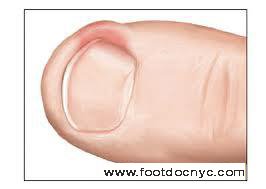
If the nail is not infected, Dr. Tabari may trim the corner
of it to help relieve your symptoms. For a partially ingrown
nail, Dr. Tabari may need to remove one side of your
nail back to the cuticle and treat the base of the nail.
Severe infections or totally ingrown nails may require
antibiotics and temporary or permanent removal of the entire
nail. To lessen pain, a local anesthetic may be used in these
procedures.
THICKENED
NAILS
Treatment
If the nail isn't infected, Dr. Tabari may be able to
thin it by filing or grinding. If a fungal infection is
present, oral or topical anti-fungal medications may be
needed. This can help prevent ulcerations under the nail
while keeping the fungus from spreading to other nails. If
pain is extreme, the nail can be surgically removed.
Call
us at 212-288-3137 to schedule your appointment!