Podiatrist in NY NYC New York City Midtown Manhattan at 136 East 57th Street between Third and Lexington Avenue. Board Certified (ABPOPPM) Podiatry, foot doctor, foot specialist, performs foot surgery, and procedures for foot pain, heel pain, ankle sprains, bunion surgery, bunionectomy, metatarsalgia, neuroma, hammer toe, warts, fungal nails, ingrown toenails, nails, thickened nails, plantar fasciitis, flat feet. Pediatric podiatrist sees children. Sells custom feet orthotics, insoles, shoes & other orthotic devices.


Podiatric Care  - Patient Services & Common Foot Problems


Choose a link:       Services Provided                 Common Foot Problems

Patient Services
 

Lifetime Treatment and Care for the Whole Family
There are more than 300 types of foot ailments that may occur anytime during our lifetimes. Dr. Isaac Tabari  specializes in foot care and diabetic foot care, beginning with infancy. Babies can experience ingrown toenails and overlapping toes, children can have foot warts and heel pain when growing, and adults should have annual checkups for ingrown toenails, foot bunions and general wear and tear on their feet.

Specialized Diabetic Treatment and Prevention
Long-term care and prevention of foot trauma and ulcerations is extremely important for individuals with diabetes. Dr. Isaac Tabari can help prevent loss of limb with early diagnosis and consistent care.

The Latest Treatment Methods
Dr. Isaac Tabari uses the latest podiatry analytical equipment, research and treatment including shockwave therapy. Surgery is always a last resort, but when necessary and deemed beneficial, office-based laser as well as in-hospital surgery is available.

24-Hour Emergency Treatment
You can call (212) 288-3137 at any time. Our answering service is available for emergencies during the night, weekends, or holidays.

Same Day Acute Care
Individuals are seen the same day they call.

House Calls
Dr. Isaac Tabari makes house calls to homebound elderly, nursing homes, assisted living centers, and adult day care centers.

Follow-up Care
You are never forgotten by Dr. Isaac Tabari. He will monitor your recovery and care following surgery and stay in touch with you to ensure healing progress and treatment visits.

Common Foot Problems

ANKLE SPRAINS
The ankle is one of the most common places in the body for a sprain. Every day thousands of people sprain their ankles. Landing wrong on your foot can cause the ankle to roll to the side. This can stretch or tear ligaments. Ankle sprains can occur at any time, such as when you step off a curb or play sports. Once you've had an ankle sprain, you may be more likely to sprain that ankle again.

- Symptoms -
Your symptoms depend on how badly the ligaments are damaged. You may have little pain and swelling if the ligaments are only stretched. If the ligaments tear, you will have more pain and swelling. The more severe the sprain, the less you’ll be able to move the ankle or put weight on it. The ankle may also turn black-and-blue and the bruising may extend into the foot and leg.

click here to find out more

 
BUNIONS
A bunion is a deformity of the foot where the big toe turns toward the outside of the foot. Also, a bump forms on the inside of the foot where the big toe begins. This is caused from improper alignment of the bones in the foot with the ankle and leg as you walk. It is a genetic, developmental problem that usually begins at an early age.

- Symptoms -
A bunion often causes pain and swelling around the joint at the base of the big toe. The skin may become red or warm. If the big toe pushes under the second toe, a painful corn may form on the top of the second toe. In some cases, bunions cause no symptoms other than making the foot harder to fit in a shoe.

click here to find out more

 
HEEL PAIN
heel painWearing shoes with poor support and no cushioning can irritate the tissue in the foot known as the plantar fascia. Being overweight or standing for long periods of time can also irritate this tissue. Any sport or activity that puts stress on the foot can cause tears in the plantar fascia and even fractures in the heel bone.

- Symptoms -
You may feel pain on the bottom or on the inside edge of your heel. The pain may be sharp when you get out of bed or when you stand up after sitting for a while. You may feel a dull ache in your heel after you've been standing for a long time on a hard surface. Running can also cause a dull ache. If a nerve is irritated, you may feel burning or a shooting pain in your heel.

click here to find out more

 
METATARSALGIA
metatarsalgiaMetatarsalgia is often caused by wearing shoes with thin soles and high heels. This puts extra pressure on the bones in the ball of the foot. Standing or walking on a hard surface for long periods also puts added pressure on the bones, causing pain. The pain can occur under any of the five metatarsal bones. Bent or twisted toes and bunions can make the problem worse. So can being overweight. Sometimes high arches or arthritis can also cause metatarsalgia.

- Symptoms -
The most common symptom of metatarsalgia is pain in the ball of the foot. it may feel as if you have a stone in your shoe. The ball of the foot may also become red and inflamed, and a callus may form under the end of the metatarsal bone.

click here to find out more

 
NEUROMA
neuromaWearing tight or high-heeled shoes can cause a neuroma. Shoes that are too narrow or too pointed squeeze the bones in the ball of the foot. Shoes with high heels put extra pressure on the ends of the bones. When the bones are squeezed together, they pinch the nerve that runs between them.

- Symptoms -
The most common symptom of a neuroma is pain in the ball of the foot between two toes. The pain may be dull or sharp. It may feel as if you have a stone in your shoe. You may also have tingling or numbness in one or both of the toes. Symptoms may occur after you have been walking or standing for awhile. Taking off your shoes and rubbing the ball of your foot may relieve the pain.

click here to find out more

 
PLANTAR FASCIA
plantar fasciaThe plantar fascia is a ligament-like band running from your heel to the ball of your foot. This band pulls on the heel bone, raising the arch of your foot as it pushes off the ground. But if your foot moves incorrectly, the plantar fascia may become strained. The fascia may swell and its tiny fibers may begin to fray, causing plantar fasciitis. This can also be the beginning of a heel spur.

- Symptoms -
With plantar fasciitis, the bottom of your foot may hurt when you stand, especially first thing in the morning. Pain usually occurs on the inside of the foot, near the spot where your heel and arch meet. Pain may lessen after a few steps, but it comes back after rest or with prolonged movement.

click here to find out more

 
TOES
mallet, claw, and hammer toesMallet toes, hammer toes, and claw toes are most often caused by wearing shoes that are too short or heels that are too high. This jams the toes against the front of the shoe and causes one or more joints to bend. Rarely, disease can cause the joints in the toes to bend. Mallet, hammer, and claw toes are among the most common toe problems. They occur most often in the longest of the four smaller toes.

- Symptoms -
You may feel pain in the toe or in the ball of your foot. A corn (a hard growth of skin on the top of the toe) may form where the toe rubs against the top of the shoe or a callus (a hard growth of skin on the bottom of the foot) may form under the tip of the toe or on the ball of the foot. Corns and calluses can also be painful.

click here to find out more

 
WARTS
wartsA wart is an infection caused by a virus, which can invade your skin through small cuts or breaks. Over time, the wart develops into a hard, rough growth on the surface of the skin. A wart is most commonly seen on the bottom of the foot (plantar wart), but can also appear on the top. Children, teens, and people with allergies or weakened immune systems are more vulnerable to the wart virus.

- Symptoms -
Warts may appear spongy, with tiny red, brown, or black spots. They can grow up to an inch or more across, occurring alone (solitary) or with smaller warts clustered nearby (mosaic). Warts are sometimes mistaken for corns or calluses. They can persist for years and recur in the same spot. If left untreated, warts can spread to other parts of the foot or even to the hands or other areas of the body.

click here to find out more

 
BLACK-AND-BLUE NAILS
black and blue nailsA black-and-blue nail is usually caused by sudden or repetitive injury to a toe. This might occur during sports that involve running or stopping quickly, such as tennis or basketball. The injury may also result from a heavy object falling on a toe.

- Symptoms -
The big toe is most often affected. Bruised, broken blood vessels cause the black-and-blue colors under the nail. If the condition is the result of a sudden injury, pain may be severe.

click here to find out more

 
INGROWN NAILS
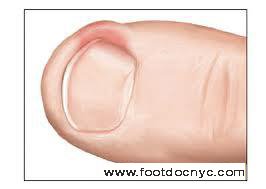
ingrown nailsAn ingrown toenail is the result of a nail growing into the skin that surrounds it. This often occurs at either edge of the big toe. Ingrown nails may be caused by improper trimming, inherited nail deformities, injuries, fungal infections, or pressure.

- Symptoms -
Ingrown nails may cause pain at the tip of the toe or all the way to the base of the toe. The pain is often worse while walking. An ingrown nail may also lead to infection or inflammation. If it's infected, you might see pus or redness.

click here to find out more

 
THICKENED NAILS
thickened nailAbnormally thick or crumbling nails may be caused by injuries, pressure from shoes, fungal infections, or conditions such as diabetes, psoriasis, or vascular disease. Eventually, the nail may loosen and fall off.

- Symptoms -
Along with thickening, the nail may appear ridged, brittle, or yellowish. The nail may also feel painful when pressure is put on it.


click here to find out more

Call us at 212-288-3137 to schedule your appointment!


NYC Foot Specialist - Podiatrist, Dr. Tabari offers full service podiatry treatments for the busy New Yorker.
He performs many types of foot surgery. His areas of expertise are diabetic foot care, sports trauma and common foot conditions such as
foot pain, ankle sprains, bunion surgery, bunionectomy, metatarsalgia, neuroma, hammertoe, hammer toe, warts, fungal nails,
ingrown nails, ingrown toenail, thickened nails, plantar fasciitis, orthotics, orthotic shoes.

Podiatrist New York City NY Midtown NYC Manhattan, foot doctor, foot specialist, foot pain, foot care, foot relief, foot doc