Ingrown Toenails - Information, Explanation, Removal, Surgery and FAQs
By Isaac Tabari
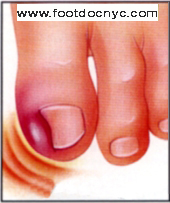 At NYC Podiatry Center of Excellence, we provide same-day treatment procedures for ingrown toenails. At NYC Podiatry Center of Excellence, we provide same-day treatment procedures for ingrown toenails.
What are ingrown toenails?
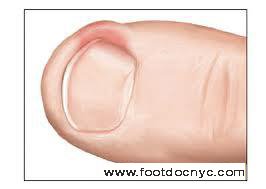
An ingrown toenail is when the edges of a toenail grow and pierce into the soft tissue of the toe. This condition is most common on the big toe (thumb) and causes quite a bit of pain, swelling, redness, and when left untreated, an infection. Patients with poor circulation, such as diabetics and peripheral vascular disease are more likely to have complications from ingrown toenails. See our Ingrown Toenail NYC Patient Handout.
VIDEO: What is Ingrown Toenail Treatment - Explanation from NYC Podiatry Center of Excellence
Learn all about ingrown toenail and need treatment? Are you wondering about ingrown toenail procedure, surgery or removal? NYC Podiatry Center of Excellence explains the procedure. Call 212-288-3137
What kind of doctor to see for ingrown toenails?
Podiatrists, also known as foot & ankle doctors, are the best doctors to see for ingrown toenails. Podiatrists are the experts for all foot and toe related issues. At NYC Podiatry Center, we performed thousands of toe-related procedures and ingrown toe nails are our specialty. Whether it's a one-time ingrown toenail, or a recurrent one, we can help with our SAME-DAY, IN-OFFICE treatment procedure.
Causes of ingrown toenails and associated infections?
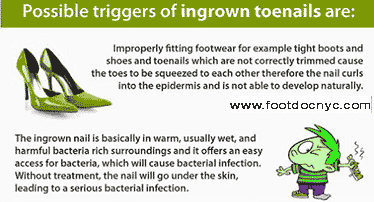
Some causes of this condition are:
- Improper fitting footwear, such as shoes that are too short, too narrow, or too flat at the end - shoes that are too tight as they crowd the toes.
- Tight-fitting socks or tights (stockings) may cause ingrown toenails as they also crowd the toes.
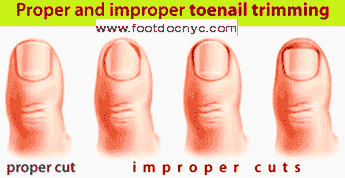
- Improperly cutting the toenails. Toenails should be cut straight across. Cutting the toenails too short, or cutting the edges of the toenail and curving the edge encourages the surrounding skin to fold over the nail. This causes the nail to push and pierce into that skin.
- Toenail injury - such as when the toe is stubbed, or if someone steps on the toe.
- Toenails with an unusual curvature - could have genetic / hereditary causes
- Posture - the way you walk or stand can influence the chances of developing ingrown toenails.
- Poor foot hygiene or excessive sweating - if the skin on the toes and feet are moist there is a higher risk of developing an ingrown toenail.
Symptoms
Symptoms of an ingrown toe nail may include:
- Tender skin adjacent to the toenail
- Swollen skin adjacent to the toenail
- Hard skin adjacent to the nail
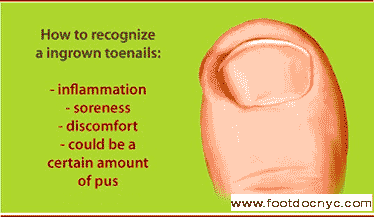
When the toenail pierces through the skin bacteria can get in, resulting in infection. Signs and symptoms of ingrown toenail infection include:
- Red skin
- Swelling in the area of the nail
- Warmth in the surrounding area
- Pain
- Bleeding
- Oozing pus which is sometimes smelly
When to see a doctor if you have a toenail issue?
If you have symptoms described above, and especially if you suspect an infection, you should see your NYC Podiatrist for treatment immediately. Some signs of infections, as mentioned above are red skin, swelling, warmth, pain, bleeding and oozing. Read more here to learn about when to see a podiatrist for an ingrown toenail.
Prevention
Ingrown toenails can often be prevented.
- PROPERLY CUT NAILS - this means not trimming them too short and cutting them across in a straight line; and NOT cutting around the corners to give them a rounded appearance. Diabetics and Peripheral Vascular Disease patients should see a podiatrist on a regular basis to have nails trimmed, as any improper trimming can cause deadly infections.
- WEAR PROPER FOOTWEAR - your shoes, socks, tight/stockings should be the right fit. Shoes must be the right length and width so that the toes do not crowd. If shoes are too loose your toes may hit against the tip of the shoe, which adds pressure and could cause an ingrown toenail. In other words, not too tight and not too loose.
- KEEP FEET HYGENIC AND DRY - if you keep your feet clean and dry your chances of developing an ingrown toenail may be significantly reduced; compared to somebody with sweaty feet.
Treatment & Relief for Ingrown Toenails
You should see your podiatrist / foot doctor to get proper and quality care. What do doctors do for ingrown toenails?
The Podiatrist may recommend the SURGICAL REMOVAL of part of the treatment, also called a TOENAIL AVULSION. He may also recommend MATRIXECTOMY. Read our blog post regarding ingrown toenail removal options.
Podiatrist will use local anesthesia to numb the area so that nothing is felt during the procedure. He then cuts away the edges of the toenail, making it narrower. He may also remove the folds of skin on either side of the toenail.
If the nail has become very thick and/or distorted the whole toenail may be removed.
The Podiatrist may recommend PERMANENT REMOVAL of ingrown nail
If an ingrown toenail is a recurrent condition that affects quality of life, the foot doctor may recomment permanent toenail removal. This involves removing the cells in the nail bed so that the toenail cannot grow back. The cells may be destroyed using chemical called phenol. Another way to destroy the cells are with laser. A local anesthetic will be used so that no pain is felt, but the patient's toe may feel tender when the anesthetic wears off. Ibuprofen or Acetaminophen may be prescribed to relieve pain, and oral antibiotics may be needed to treat any infection. For about one or two weeks the patient will have to wear either very soft and spacious footwear or open-toed sandals.
You may need to take oral antibiotics and the nail may need to be partially or completely removed. The doctor can surgically remove a portion of the nail, a portion of the underlying nail bed, some of the adjacent soft tissues and even a part of the growth center.
***This material is only provided as helpful information and not as medical advice and you should consult with your foot doctor or another medical doctor for a professional diagnosis. ***
For more information on foot and ankle podiatry services and to make an appointment with best NYC podiatrist - foot doctor, please call us at (212) 288-3137 or click below to make an appointment:

|